Buttons 7OH Lab Tests — this page covers it in full: what the specification means, what each figure refers to, and the checks worth making before you buy.
Every production lot of Buttons 7OH Gold Label is independently assayed before it ships. This page explains exactly what is tested, what the results mean, and how to match the lot code on your bottle to its report.
How To Verify Your Bottle
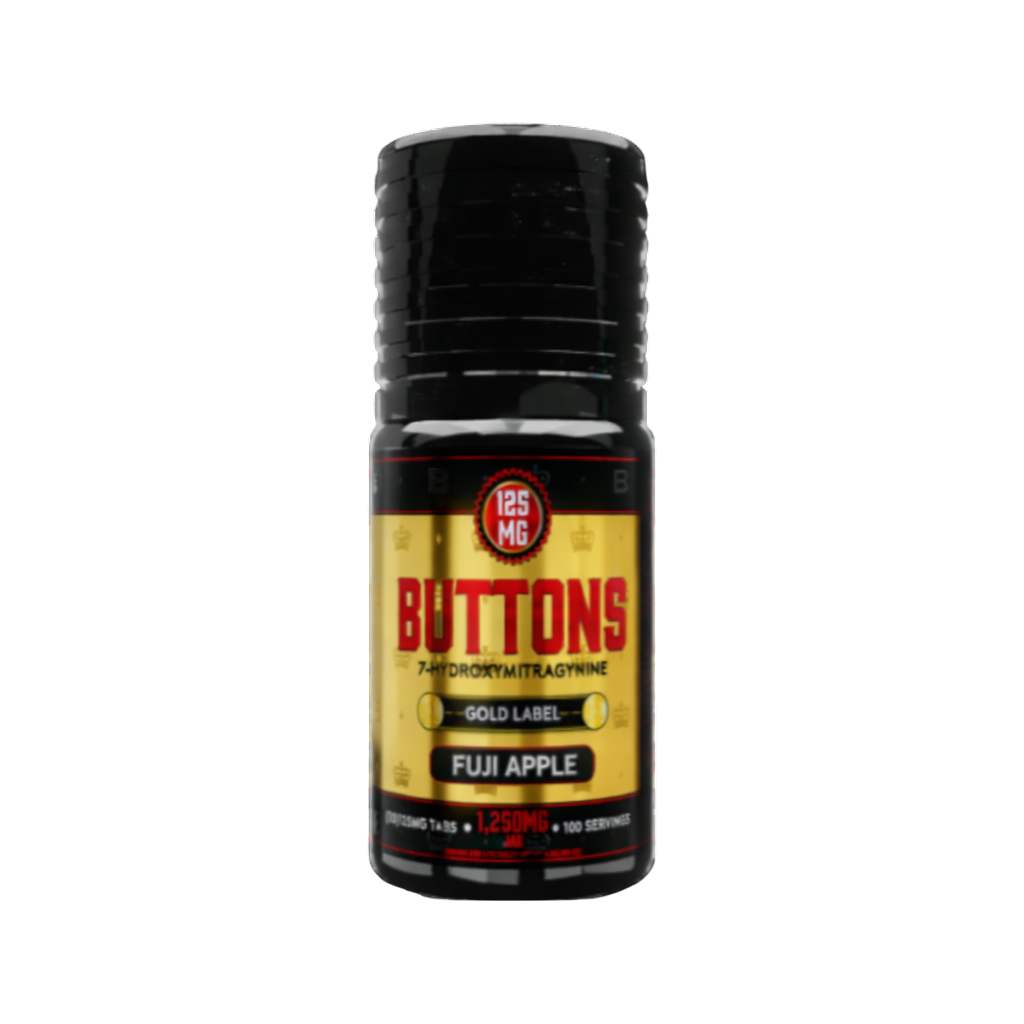
- Find the batch lot code printed on the bottle label
- Email [email protected] with the lot code and a photo of the label
- We return the matching certificate of analysis, usually the same business day
Reports are issued per production lot, not per individual bottle. If your lot code matches an existing report, you will receive that document. If a seller cannot produce a report matching your lot code, the product is not verifiable and you should treat that as a red flag.
The Four Test Panels
1. Potency — HPLC Assay for 7-Hydroxymitragynine
This is the primary test and the one that confirms the 125mg per tablet claim. High-performance liquid chromatography separates the alkaloids in a sample and quantifies each one against a calibrated reference standard.
What to look for on the report: a stated result close to the label claim, and a relative standard deviation (RSD) that is low. RSD tells you how evenly the alkaloid is distributed through the batch. A low RSD means every tablet in the batch carries approximately the same amount — which is the whole point of a standardized product.
Full explainer: HPLC Potency Testing for 7-Hydroxymitragynine.
2. Heavy Metals
Botanical material takes up metals from soil, and extraction concentrates whatever is present. The standard panel screens for lead, arsenic, cadmium and mercury against established safety thresholds. This is why certificates from regions with lighter soil testing regimes are worth scrutinising carefully.
Full explainer: Heavy Metal Testing in Kratom Extracts.
3. Residual Solvents
Extraction requires solvents. A properly manufactured extract removes them through evaporation and purification, and residual solvent testing confirms that the finished product falls below accepted limits. An extract that has not been tested for this is an unknown quantity regardless of how good its potency number looks.
Full explainer: Residual Solvent Testing in 7OH Extracts.
4. Microbial Safety
Botanical powders can carry mould, yeast, total aerobic bacteria and specific pathogens including Salmonella and E. coli. Microbial panels confirm both that contamination is absent and that the product has been handled in a controlled environment.
Full explainer: Microbial Safety Testing for Botanical Tablets.
Why ISO-17025 Accreditation Matters
ISO/IEC 17025 is the international standard for testing and calibration laboratory competence. An accredited lab has been independently audited on its methods, equipment calibration, staff competence and reporting integrity.
The practical difference is straightforward. An unaccredited lab can produce a document that says anything. An accredited lab is accountable to an external body for the accuracy of what it signs. When you see “ISO-17025 accredited” on a certificate, that is the claim being made — and the accreditation body and certificate number are usually printed on the report so you can check it.
Reading a COA: The Five Fields That Matter
| Field | What it tells you |
|---|---|
| Lot / batch number | Confirms the report matches your specific bottle |
| Test date | Older reports may not reflect your batch |
| Method | HPLC is the standard for alkaloid quantification |
| Result vs specification | Shows the measured value against the pass limit |
| Lab name and accreditation | Says who stands behind the number, and to what standard |
Line-by-line walkthrough: Reading a 7OH Certificate of Analysis.
Manufacturing Context
Testing is only half the picture. The other half is process control — how evenly the alkaloid is distributed through the blend before tableting, and how the finished tablet is protected afterwards.
- Geometric micro-blending distributes a small quantity of potent extract evenly through a larger inert base. Without it, one tablet in a batch can be dramatically stronger than its neighbor. See Why Geometric Micro-Blending Matters.
- UV blister and bottle packaging protects the finished tablet from light and moisture degradation. See UV Packaging vs Plastic Bottles.
- Labeling standards govern what must appear on the finished product. See Compliance & 7OH Labeling Standards.
Request a Certificate
Send your batch lot code with a photo of the bottle label to [email protected] and we will return the matching report. Wholesale partners receive batch documentation automatically with every case shipment — see the wholesale program.
Buttons 7OH Lab Tests: What Each Report Covers
Buttons 7OH lab tests are run per lot, not per year and not per brand. Alkaloid content varies between botanical runs, so a certificate issued for an earlier batch tells you very little about the bottle in your hand. The lot code is the unit of verification.
Each lot is screened for potency by HPLC, and the run is checked for heavy metals and microbial contamination. The sections below explain what each of those tests establishes and, just as importantly, what it does not.
Sources & Further Reading
Primary and independent references used to compile this page.
Buy With Documentation
Every Buttons 7OH bottle ships with a verifiable batch lot code. Request the matching COA any time.